

Exploring the Link Between Tea, Perception, Palate and Breath

Tea can be more than just a drink and take us back to a place within that modern life often challenges us to connect with. When we slow down and truly engage with tea, it becomes a training ground for perception and deepened awareness. Let's explore how rushing changes taste, how stillness reveals layers, and the relationship between the palate and breath.

How Rushing Changes Taste and How Stillness Reveals Layers
When we drink tea quickly, we miss much of what it has to offer. Rushing through a cup dulls the senses and flattens the flavor. The palate needs time to detect subtle notes and nuances.
The tongue and nose work together to identify taste and aroma. Speeding through tea limits this interaction.
Fine teas have layers of flavor that unfold gradually. Quick sipping makes us overlook this complexity.
Rushing disconnects us from the moment, the only place where we can fully experience the tea (or anything) at hand.

The Relation Between the Palate and Breath
Breath plays a crucial role in how we perceive aroma and taste. The connection between the palate and breath is essential for full flavor appreciation.
Sniff the aromas: much of what we taste comes from aroma molecules reaching the olfactory receptors in the nose (orthonasal olfaction).
Calmness helps register the subtle layers: take a sip of tea and let it move over your tongue and palate before you swallow. Your tongue, palate, and back of your throat are a sensitive taste and aroma "apparatus." Focus inward and let the tea speak to you. Do not force anything, just perceive.
Retronasal olfaction: breath and palate work together. Breathing out gently through the nose when you swallow allows you to sense the tea’s fragrance and subtle notes via your retronasal olfaction, via the vacuum created. Now you can register the flavors through your nose from the back of your palate.

How to Use Your Tea as a Training Ground for Perception
To make the most of your tea tastings, here are some things to consider:
Choose quality over quantity: High-quality, fine teas are more expensive, but their effects are also much more rewarding. Choose your suppliers carefully.
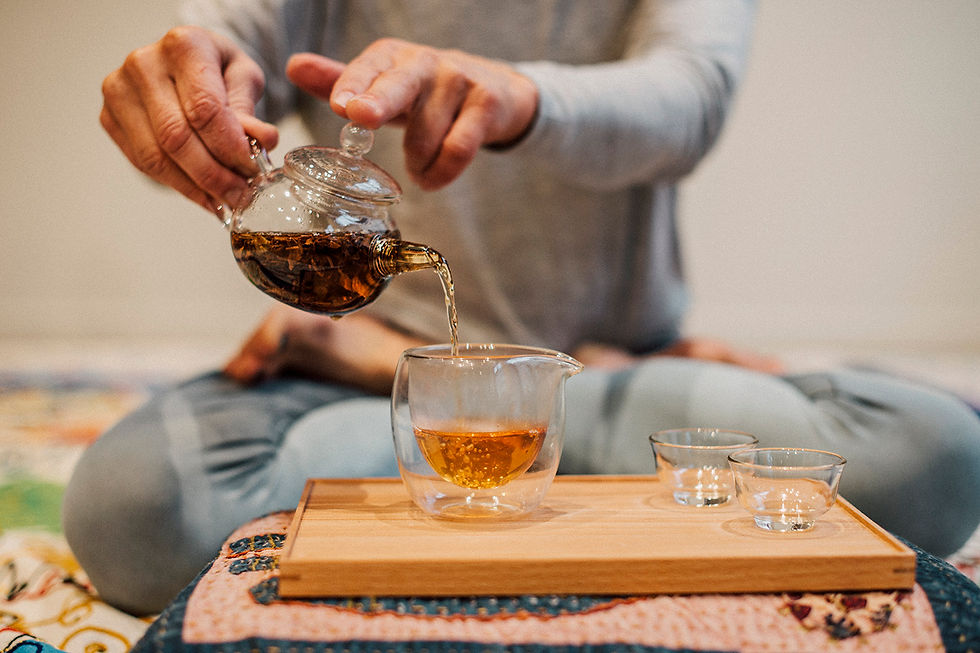
Create a nice space: Find a calm spot free from distractions to drink your tea.
Slow down: Sip slowly and mindfully. Avoid gulping or multitasking.
Focus on breath: Pay attention to your breathing as you taste. Try exhaling gently through your nose after each sip. Slow (especially longer) outbreaths help calm your nervous system.
Notice changes: Observe how the flavor of the tea evolves.
Reflect on sensations: Take a moment to recall the flavors you experienced and how the tea made you feel.
The more you practice, the more complexity you will be able to register—not only in your teacup. The stillness and breath awareness you cultivate will help you stay calmer and more focused in everyday life. Happy sipping!
As a private person you can purchase the teas I offer at Långbrogård in Mölnbo. If you are a company, welcome to contact me here. Your are always welcome to connect with me on instagram tea.master.s


Comments